
If you’ve traveled a lot in Europe and made a point of visiting the big museums, then you’ll have seen enough of the big masters like Picasso, Rubens, .. that you feel permitted to move on to lesser known art museums. I had hoped to visit the Pergamon museum because I wanted to see the Ishtar gate again, but that’s unfortunately closed for renovations. After a review of the list of museums and a spirited discussion, we decide on two smaller museums, each dedicated to a specific subject that you don’t encounter often.
We leave the apartment around nine to take U-Bahn 2 to the west, all the way to Charlottenburg. We ignore the giant castle looming at the end of the Schloßstrasse (castle road, unimaginatively) and walk into the Bröhan museum. It has a permanent collection of Art Nouveau, Art Deco and Functionalism furniture and decorative items like vases and sculptures, the largest I’ve seen. The original pieces are grouped by time and country, so it becomes immediately obvious how they evolved. The context that influenced them is also explained. All in all, it’s a nice mix of text and pieces. I know Art Nouveau best, because Belgium has quite a few buildings of Victor Horta and many places in Antwerp have buildings or decorations in that style, like the Art Nouveau reception room of the Horta.


We also visit the two temporary exhibitions here, with subjects completely unknown to us but interesting to see. Hans Baluschek was a painter in Germany before the second world war and you can see his socialist leanings in his works. The exposition aims to show how his political views are visible in the symbolism of his paintings. Although I’m not a great fan of the style, the information about the socialist movement in that time is interesting to read. Fun detail is the kids atelier, where some drawings of the artist are available as stamps and you can make your own postcards, which of course we do.
The top floor shows a collection of artwork and posters of PGH Glühende Zukunft, an artist collective founded in Berlin just before the fall of the Berlin wall in 1989. The four founders are graphic designers and cartoonists and involved in the demonstrations of that time with flyers, posters and graffiti. It’s great artwork and a new (for us) way of looking at that period.
We decide to tackle the long U-Bahn trip to town first. It’s not yet noon, but already scorchingly hot and we know that’s not going to be any better in the metro. We pop out at Alexanderplatz, a shopping nexus with many restaurants and bars. We find a sushi place nearby (King King, delicious) and take our time, avoiding the oppressive heat outside. After that it’s a short walk to the Tchoban Foundation.

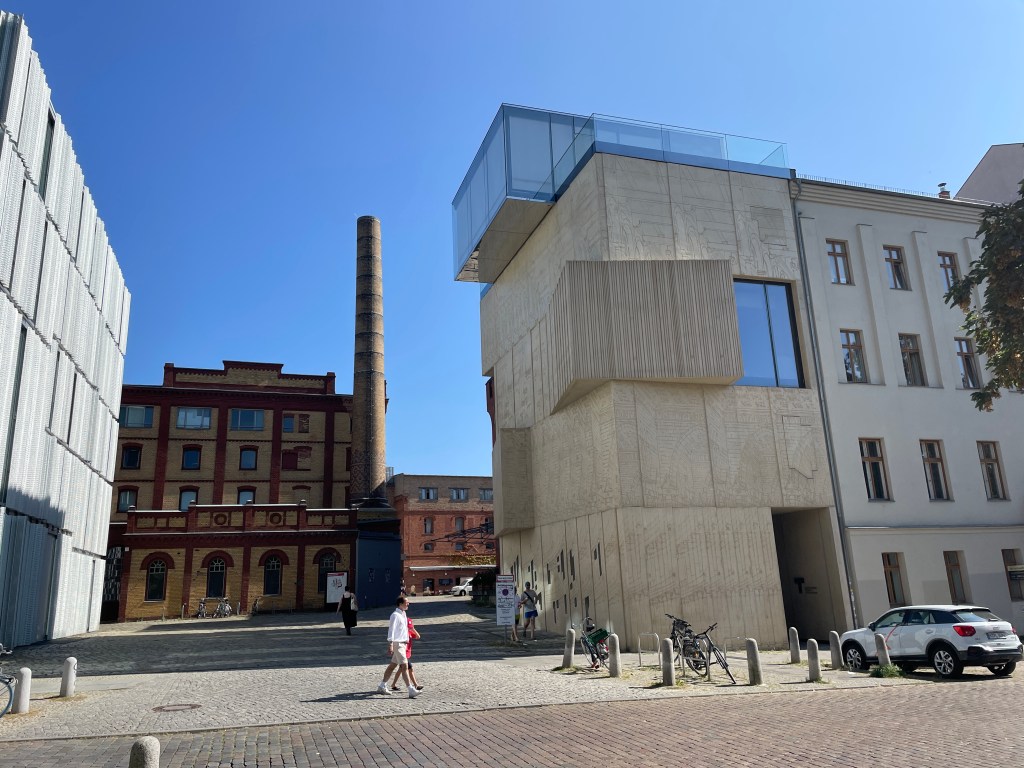

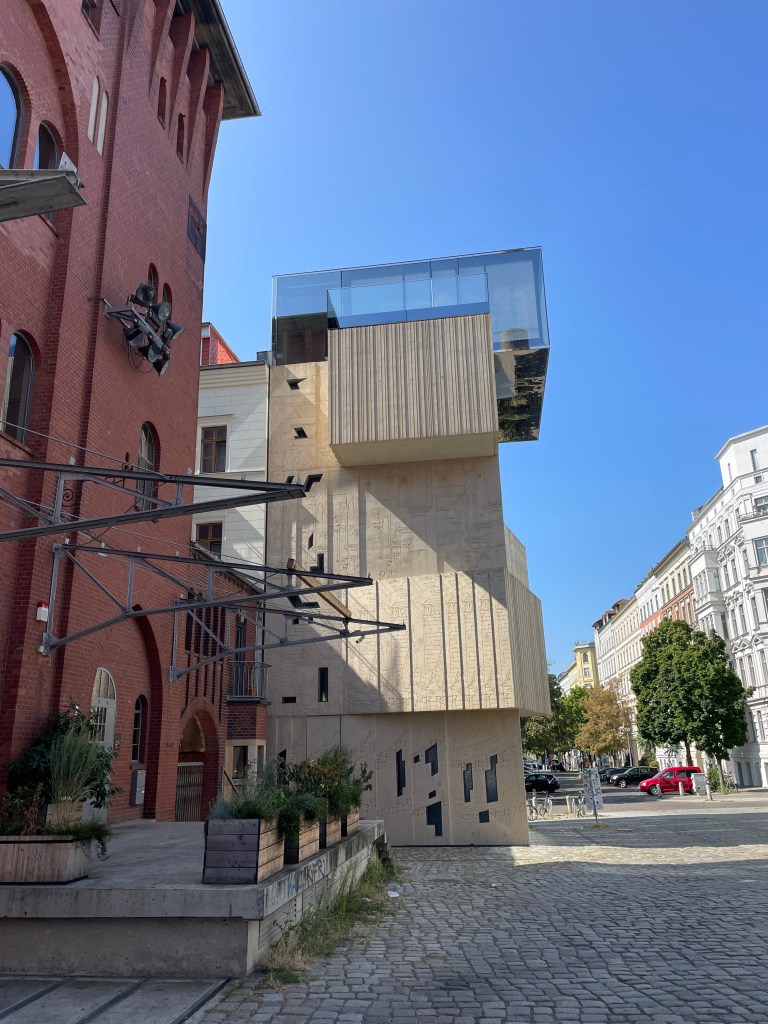
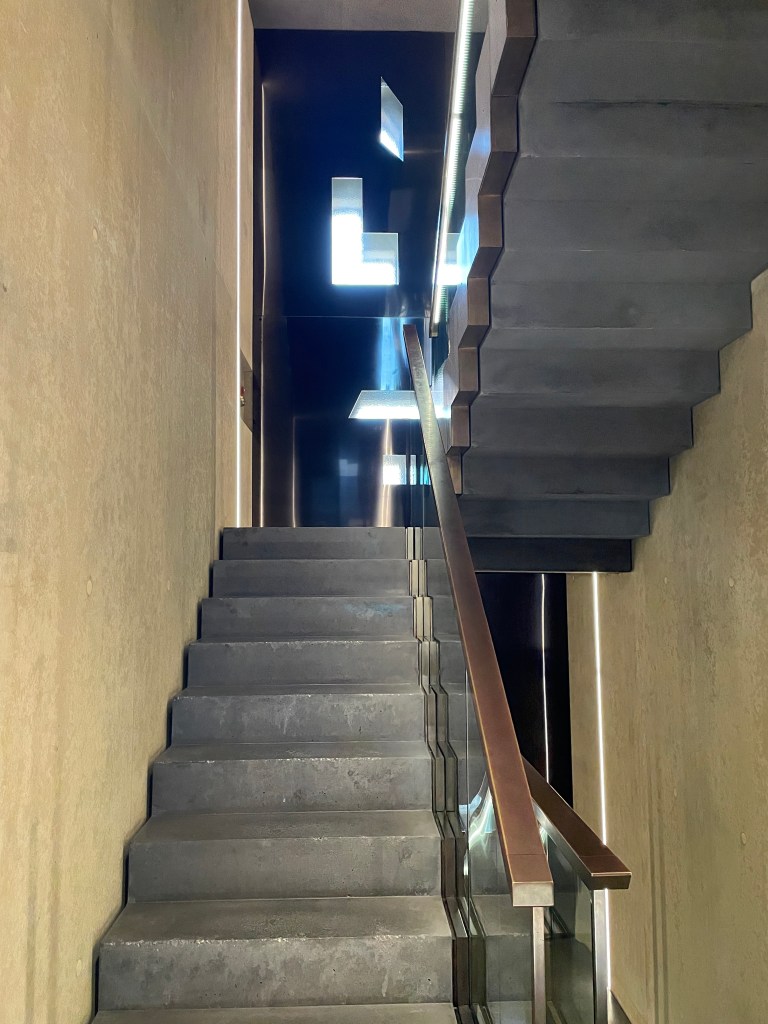
We really wanted to see the building, by the SPEECH architect bureau, an irregular concrete extension of an older industrial building. The concrete is inscribed with patterns from architectural drawings (that is also what the museum inside is about) and fits neatly into the neighborhood. The interior is minimalist, with concrete stairs, white walls and ceilings and wooden floor boards. Currently the museum is exhibiting drawings of Lina Bo Bardi, an Italian-Brazilian architect. We hadn’t heard of her, since most of her buildings are in Brazil, but it’s fascinating to read about her life and work.
We have a bit of time to kill before our dinner reservation, so we head back to the apartment around three for some well deserved rest.
Around six we put on our fanciest clothes, but stick with sneakers because 1/ that’s all we have with us and 2/ we will walk to get there and back. Because it’s still so warm, we hop on the U-Bahn for just one stop and then walk the rest of the way to HORVÁTH, in the Kreuzberg neighborhood. We sit inside, away from the bustle of the street, to enjoy the twelve course menu. The chef is Austrian and very much inspired by Austrian cuisine. The selection of wines is also from Austria and neighboring countries, which is fun because I’ve encountered French, Spanish and Italian wines more often in Belgium. Their own website describes their cuisine as emancipated vegetable cuisine and I find that a very apt description. The menu is not entirely vegetarian (though they can make it so on request) but the focus of each plate is a fruit or vegetable, often in an unexpected shape, texture of seasoning, with complete disregard of expectations of sweet and hearty. Delicious! Extremely hard to describe, too.


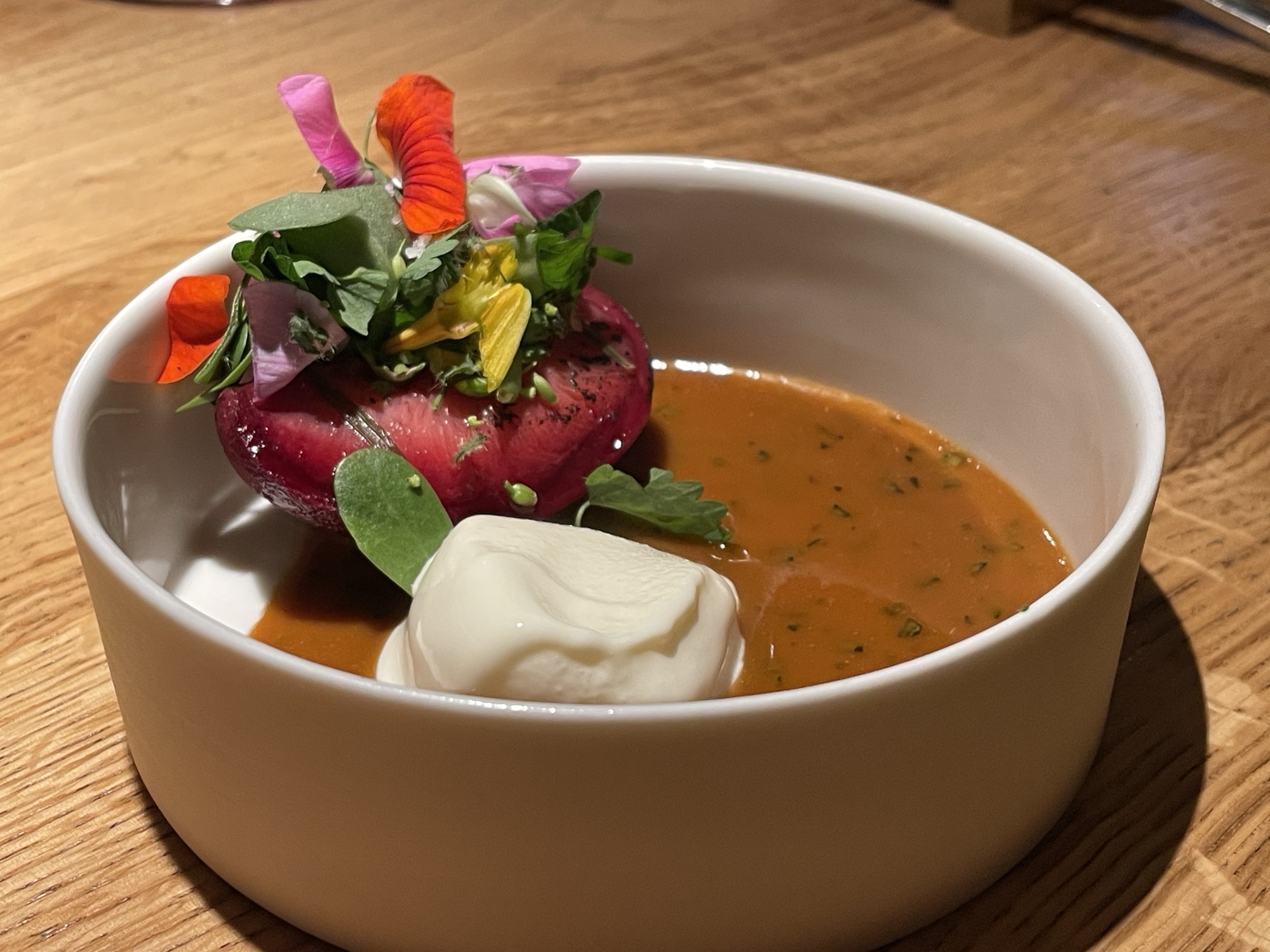


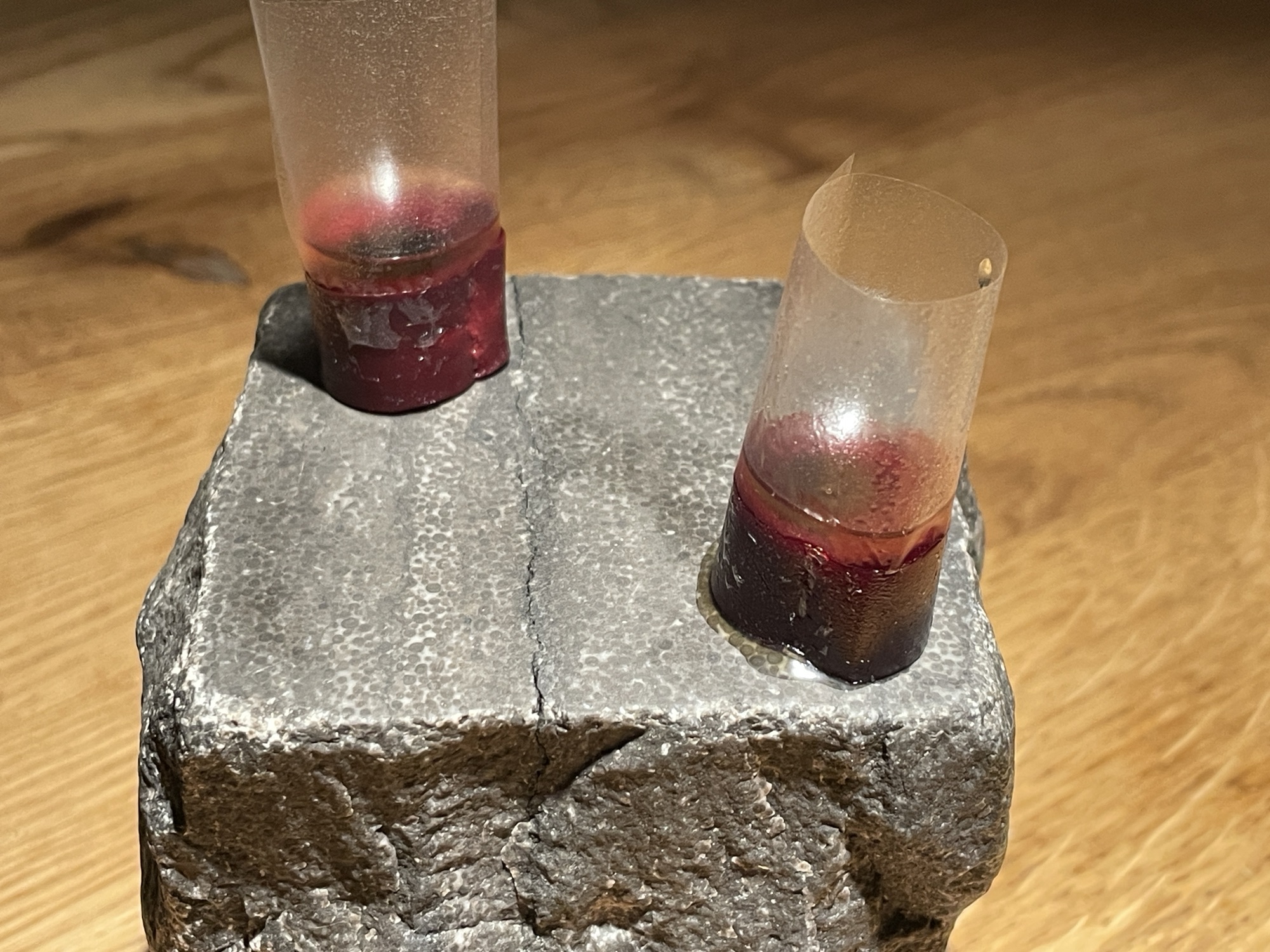
We wrap up around ten pm and decide to walk back to the apartment, the neighborhood is extremely lively with young adults eating and drinking on the street and music being performed. It’s still extremely warm, but the apartment is not too bad. One more night and day in Berlin, tomorrow evening we talk the night train back!
 Febe writes