

It’s a bit weird to start a daily post with yesterday’s dinner, but what can you do when dinner time starts only at eight thirty.. We have dinner in the hotel restaurant, where we’re the only customers until another guest walks in around ten. The waitress speaks English and they even have an English menu available, which is not as common as you might think. I have local smoked ham as an appetizer, then scallops with a thick slice of slow cooked bacon, an unknown but delicious cut of pork and finish with torrijas (French toast) with ice cream. It’s all very well prepared, and excellently accompanied by two glasses of local wine – local in the sense that they’re produced by the hotel from grapes of the vineyards around the hotel. A vegetarian option is not available, this is still a country of meat eaters.
Up at eight, breakfast at nine and off we go around ten thirty. We only have a vague plan today, as we couldn’t find much info on hiking trails in the area. It looks like they’re there, because tour operators include small hikes in their program of visiting wineries and monasteries, but I can’t find any ‘official’ trails of the tourism office or anything like that.
We drive north, down to the Ebro river which is the heart of the Rioja region. The river valley is fenced in on the south side by the Sierra de Cebollera (with Pica de San Lorenzo the highest peak at 2.271 m) and in the north by the Sierra de Catabria, a bit lower but more severe looking, with high cliffs bordering the valley. The road winds through vineyards, around the tiny villages occupying the rocky crags, with a church or defensive tower at the highest point. It’s very charming, especially now that the vine leaves are turning yellow and gold.
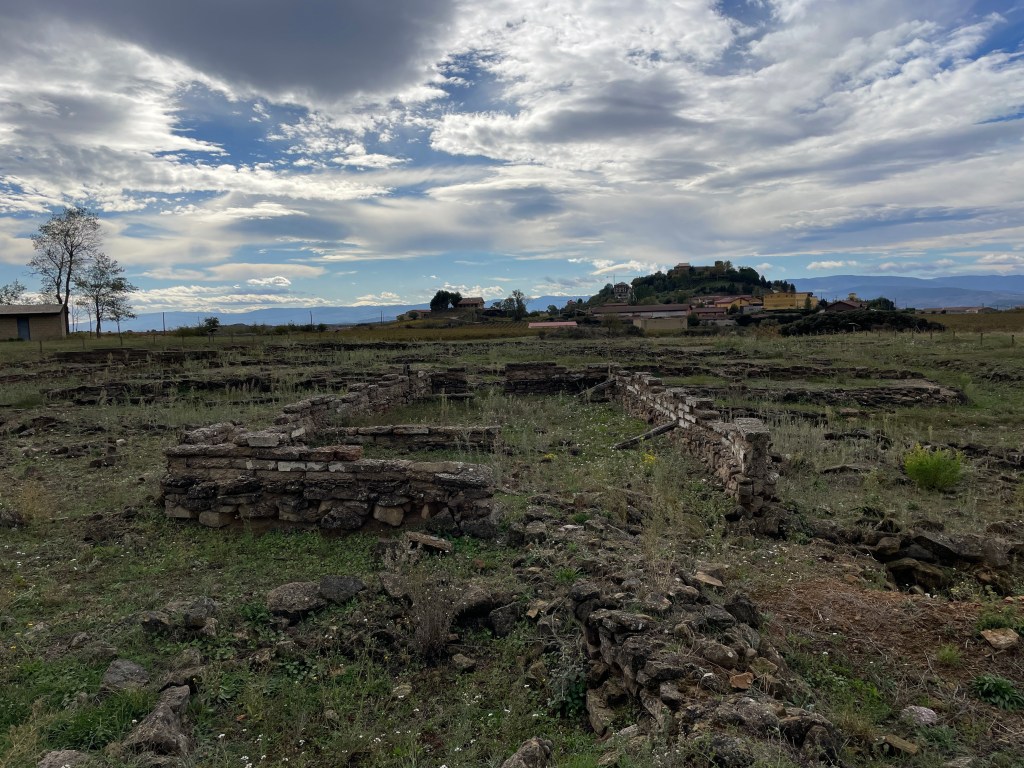
A small sign indicates the turn-off to La Hoya, we have no idea what that is but since the sign also has a symbol of toppled greek columns, it must be some historic site and we decide to check it out. It’s a bit hidden and extremely quiet, but it turns out to be one of the most important prehistorical sites of Spain, occupied for about 1000 years in the Bronze and Iron ages by a prosperous town and only excavated in the sixties. The reason it’s so important is that many daily life objects were preserved. The village was attacked and destroyed in a fire, leaving shops, streets, buildings, but also people and livestock buried by the walls and roofs. Most of the exposition in the reception building is only in Spanish and Basque, but the museum attendant explains the basics and hands us an audioguide, which does have an English option. At the site itself you can still see streets, houses, shops, .. really impressive.

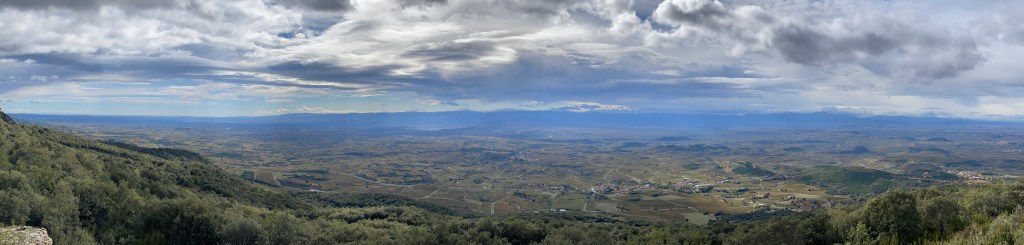
We wrap up around noon and start north again, driving up to a mountain pass. After a brief stop at Balcón de La Rioja, a viewpoint with impressive vistas over the valley below, we find the Puerto de Herrera, the highest point on this stretch of the road north at 1125 m, and park our car in the tiny gravel lot. It’s windy and cold, only 12° C or so, and we can see the clouds rolling in. This is supposed to be good hiking country and indeed it looks very promising: deciduous woods, craggy peaks, small forest roads, .. The plan is to do the five km loop to the San Leon peak, then have lunch around 3 pm or so, and skip dinner alltogether.
Getting ready for the walk involves putting on decent hiking shoes and warmer outer layers, getting on the camera on its chest rig and the extra camera stuff in the backpack, as well as grabbing rain gear just in case. We climb about 100 m in a short stretch of 500 m, the scenery is very impressive: woods, woods, small birds, then suddenly you’re on a peak of 1220 m overlooking the Ebro valley. A bit nerve-wracking, to be honest, as the path is extremely steep, I mean loose leaves and soil, use your hands to pull yourself upward kind of steep, sit your bum down on the rocks and gently lower yourself kind of steep. After we lose the way and don’t manage to find anything that looks like a safe trail, we decide to simply turn back and find another, more relaxing activity.
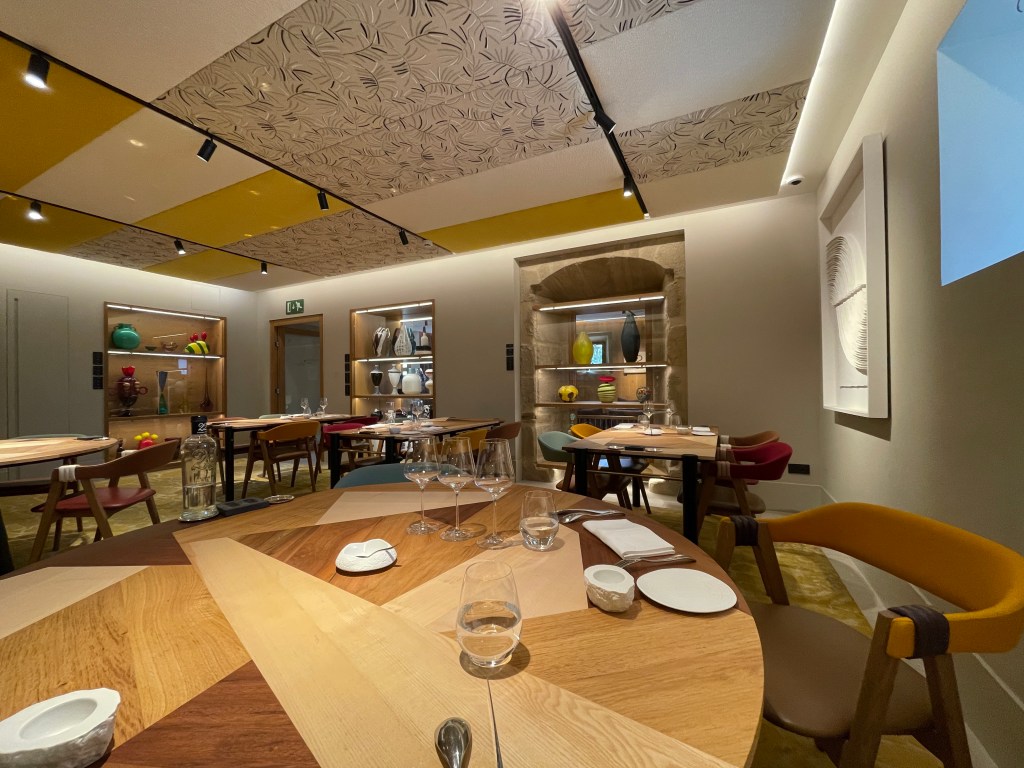
By the time we’re back at the car (knees aching from the steep descent) we’ve decided to find a fancy restaurant for lunch. We pick one based on their website, give them a call and indeed they have room for us, we can be there in fifteen minutes. We brave the cold and change clothes right there on the mountain pass and fifteen minutes later, just after two pm, we are seated, all alone, in a modern restaurant with a gastronomical menu. In the Basque style, the menu is composed of many small dishes. In this case fifteen separate preparations, some as simple as a ham croquette, others wildly complicated, all served on fancy porcelain. Arne has the accompanying wines (three glasses), but I, as the designated driver, stick with mineral water. The food is delicious, sometimes innovative (partridge-filled brioche with chocolate sauce and mushrooms), sometimes a variation on a traditional local dish. We learn that smoked milk is a Basque tradition from the shepherds, who milked the sheep in the high pastures, using wooden pails. They couldn’t heat these on a fire, so they dropped hot stones in the milk, giving it a smoked flavour. I get so distracted at times that I even forget to make a photo.. hence less photos below than the fifteen promised dishes.
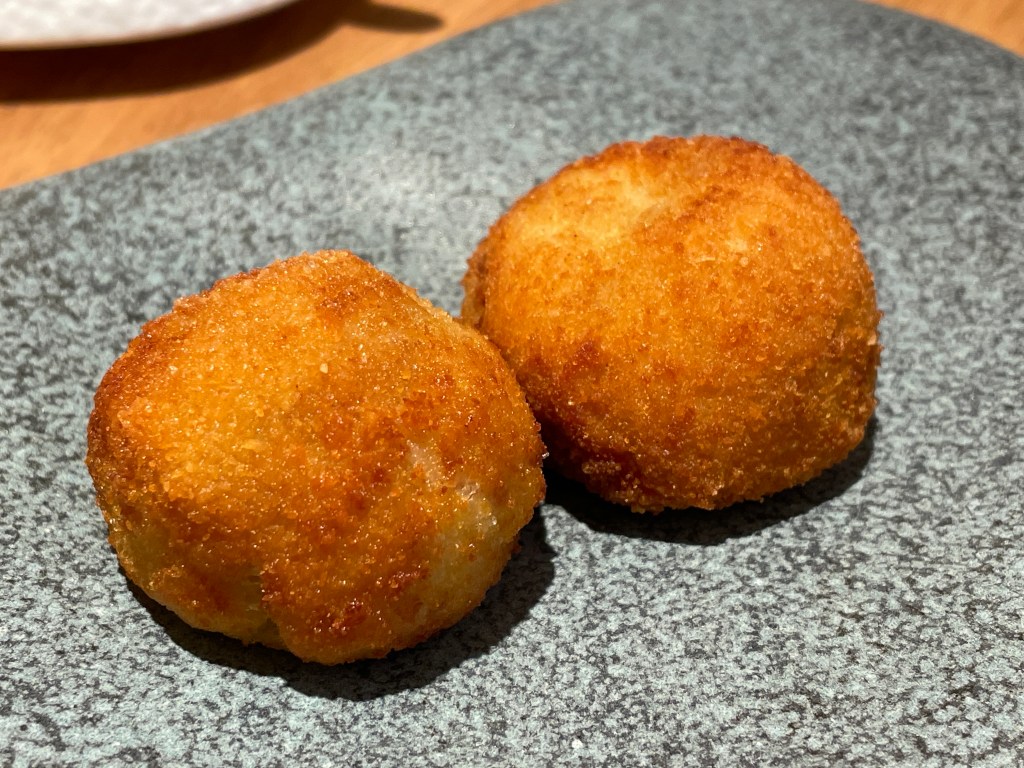


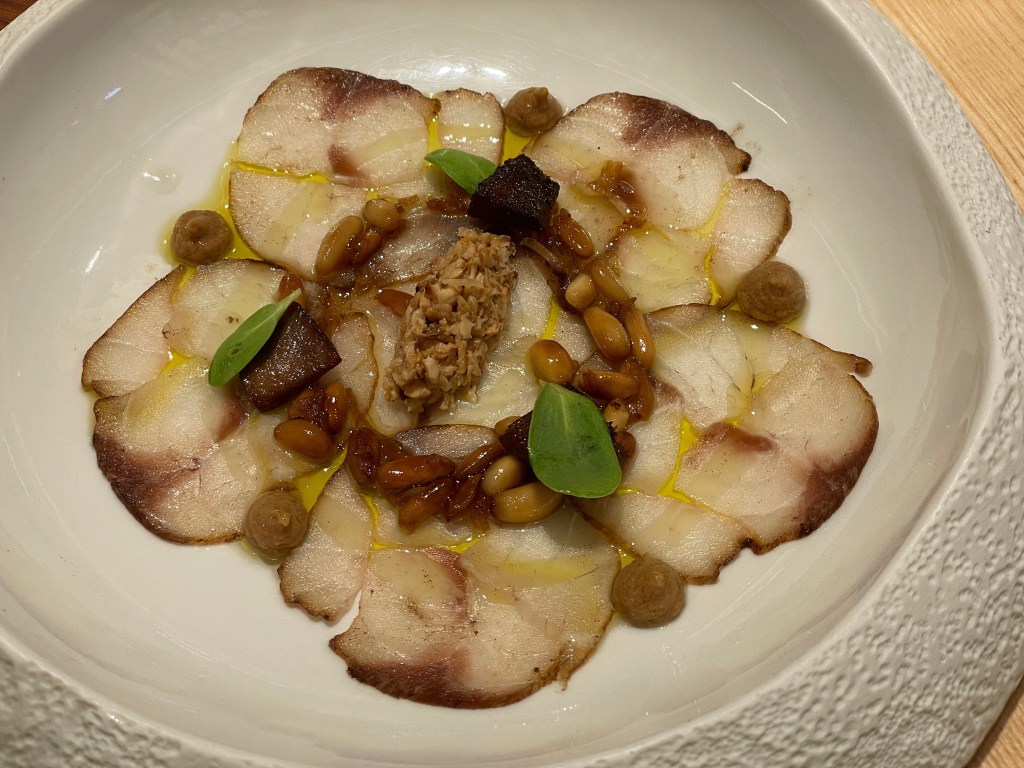
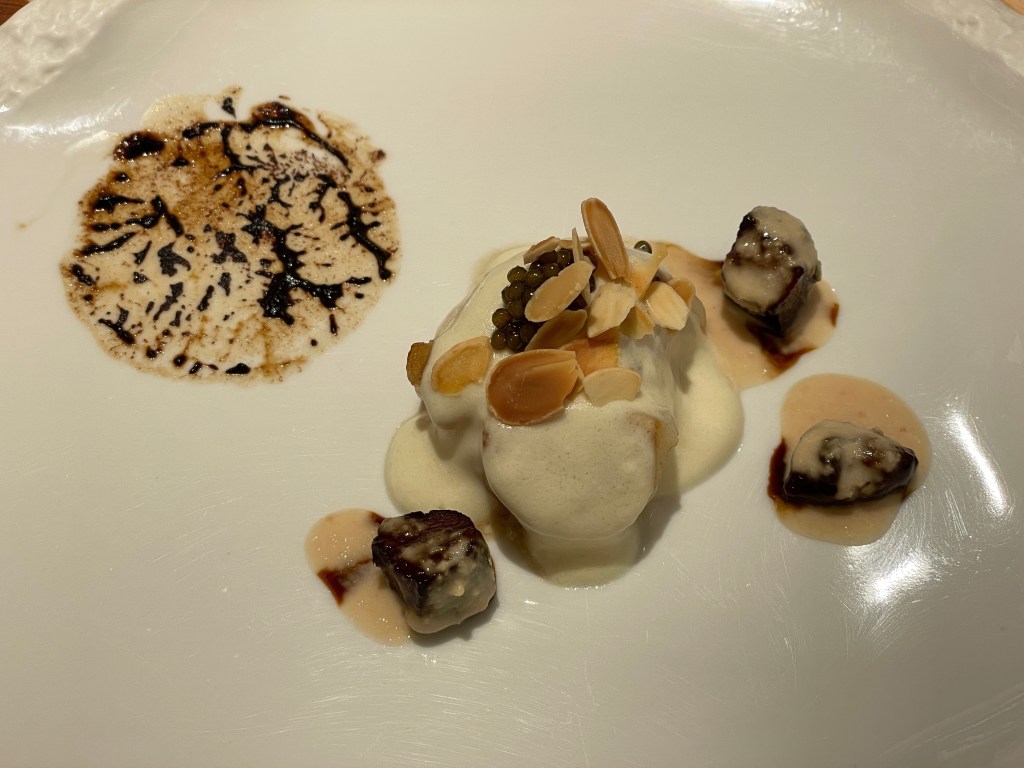


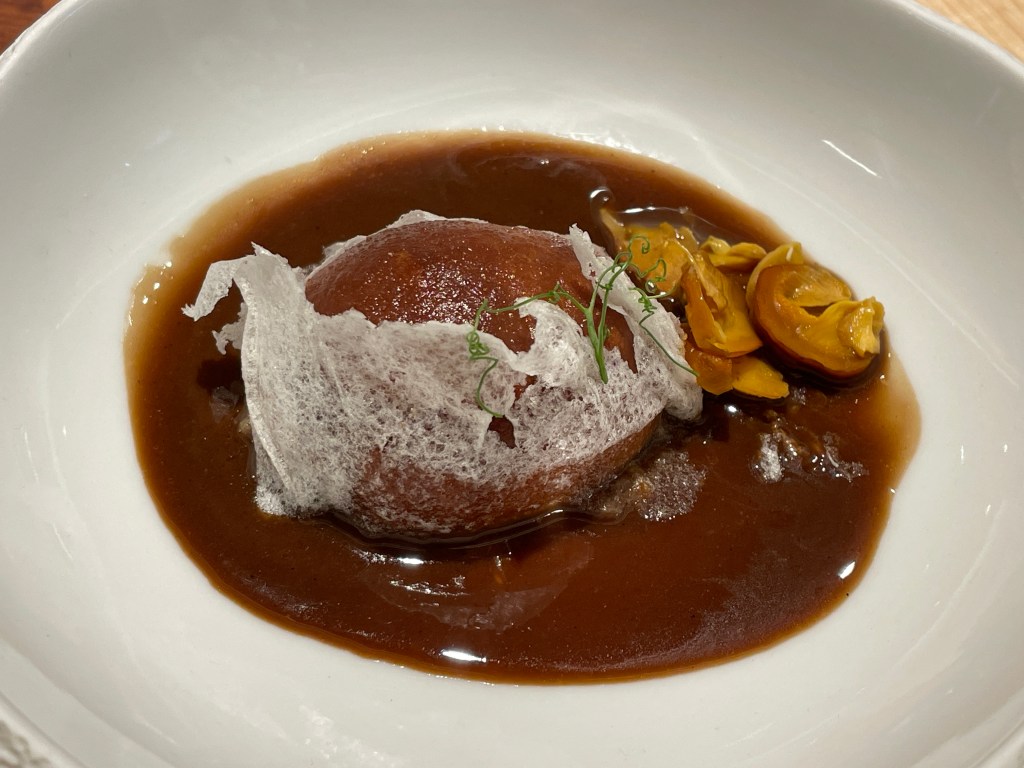
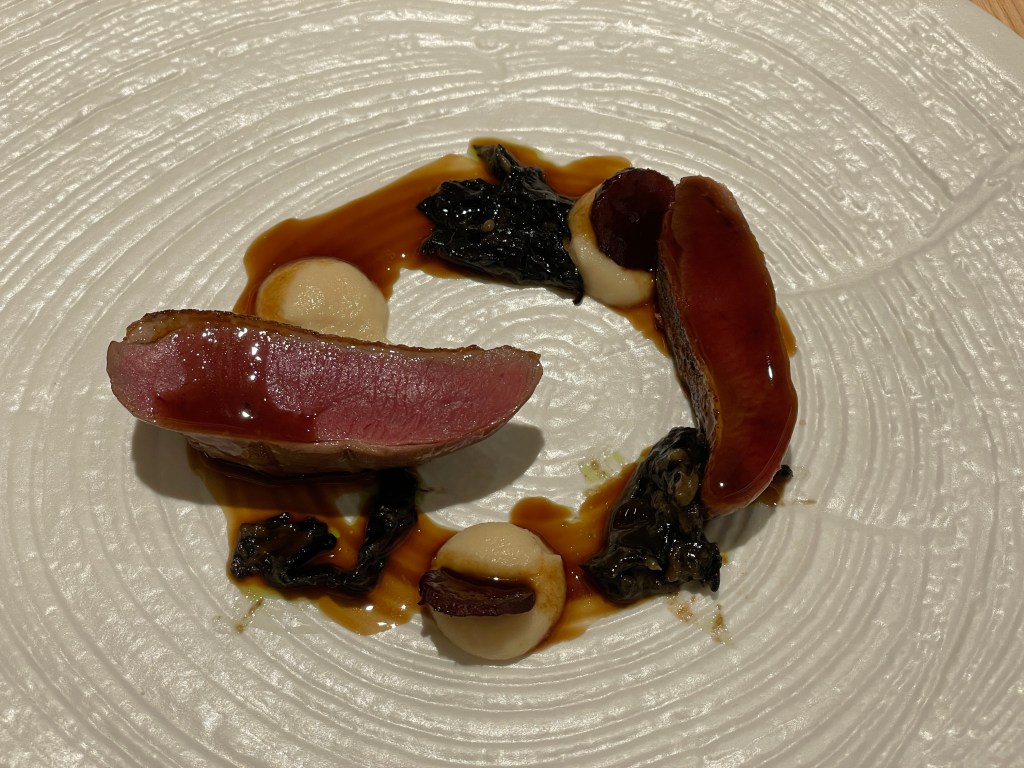

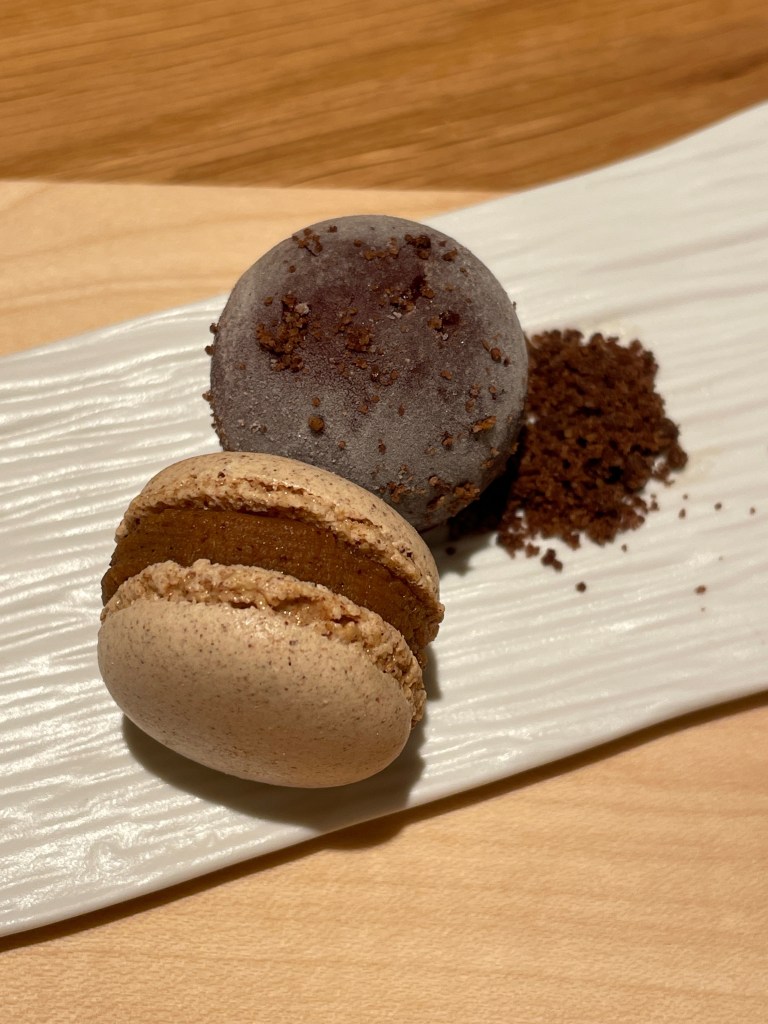

Satisfied and entirely relaxed, we walk out around around four thirty. That may seem late to you, but you should realise that many shops and things to see/do are still closed for siesta at this time. We take a small tour around the village, admire the church/fortified tower (in this case they’re actually one, blocky building) and then resume our route north.
It’s highway almost all the way, but never level and never straight. Most of it is even windy and climbing/descending simultaneously, with stretches where it’s so exciting that the maximum indicated speed is 80 kmph. In other words, it’s picturesque, but not really fast. It’s a bit busier around Bilbao, but soon after we see the Atlantic Ocean appearing through the hilltops and we soon approach Santander, where we’ll be staying for two nights. We hop in the jacuzzi, then get ready to go out again. The B&B hostess advised a local bar which also serves pintxos, but upon arrival around nine it turns out that’s only in weekends. The ancient bartender scrounges up some bread and salami for us, we have a drink and read/write, surrounded by local seniors having a beer. Breakfast tomorrow is available as of nine (nine!), so the aim is to stay up late and get up late. Tomorrow we’ll visit Cabárceno!
 Febe writes